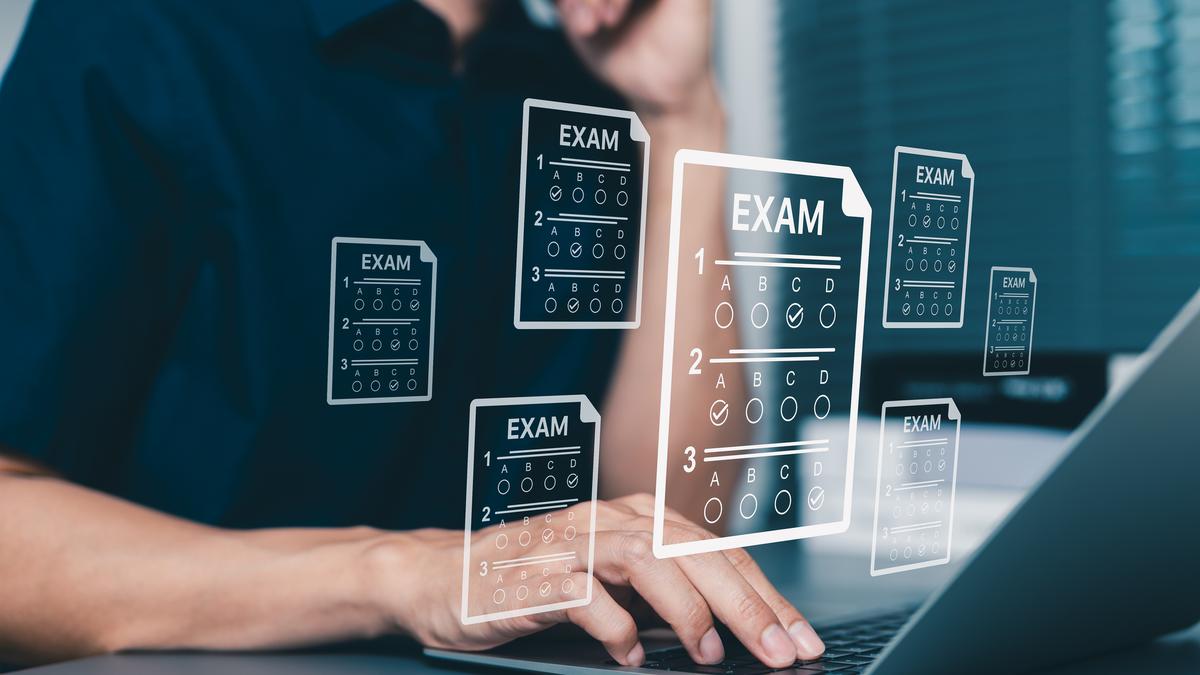
The ongoing shift towards computer-based entrance examinations in India was meant to solve real problems. It promised faster evaluation, smoother logistics, standardised testing conditions and, above all, a more modern assessment system. In principle, these are worthwhile goals. Yet, an uncomfortable question now confronts us. When an examination is conducted only on a computer, is it testing subject knowledge alone or also a student’s familiarity with the machine?
This is not an argument against digital examinations. India cannot, and should not, retreat from technological progress. But advances in education must be judged not merely by administrative convenience but by whether it enlarges fairness. An entrance test is supposed to measure preparation in the subject and not inadvertently reward those who are more comfortable navigating screens, scrolling passages, switching between tabs, or managing a mouse under pressure.
This concern is especially relevant in the context of the Common University Entrance Test (CUET), which was introduced to create a common platform and reduce inequities produced by differing school boards and admission processes.
But a common test can become an unequal test if the conditions needed to take it are themselves unequally distributed.
Wide gap
The digital divide in India is no longer about internet access alone. It is also about the quality of access. For many urban students, computers, online mock tests and digital interfaces are part of everyday academic life.
However, for others, access is irregular, shared, paid for by the hour at a cyber café, or absent altogether. Even among students who are intelligent and hardworking, comfort with a screen cannot be assumed.
Research has long shown that exam mode is not neutral. Students unfamiliar with digital interfaces often face an additional cognitive burden. They are not just solving questions, but also managing an unfamiliar testing environment.
In a high-stakes exam, even small hesitations can matter. Time lost in navigation, anxiety about clicking the wrong option, or discomfort with reading long passages on screen may cumulatively affect performance. In such cases, the examination risks measuring technical ease as much as academic merit.
There is also a psychological dimension. All entrance examinations generate stress. But technology-mediated exams can introduce a different kind of anxiety: not be about the syllabus but about the system itself. Students with limited exposure to computers may carry this additional stress into the exam hall before a single question is attempted.
Still, it would be unfair to suggest that paper-based exams are automatically superior. Computer-based testing offers clear advantages. It can reduce manual errors, speed up processing, standardise the presentation of questions, and, if designed well, improve transparency.
Nor is pen-and-paper immune from malpractice or logistical breakdowns. The real issue, then, is not digital versus non-digital. It is whether one format should be imposed uniformly in a deeply unequal educational landscape.
Road ahead
A balanced way forward lies in reducing the bias towards technical proficiency without discarding the gains of digitisation.
First, major entrance examinations should consider a hybrid option for a transitional period, allowing students to choose between computer-based and OMR-based formats. This will separate knowledge assessment from medium familiarity.
Second, if computer-based testing is to remain the base, government schools should provide free mock tests, mandatory interface orientation, and hands-on digital practice well before the examination season.
Third, exam design requires simpler interfaces, more intuitive navigation, and clearly structured screens to reduce anxiety. Good assessment design should minimise the role of interface skill in determining outcomes.
Finally, access must be treated as part of fairness. If the system expects every student to take a digital exam, then reliable digital preparation should become a public guarantee, not a private advantage.
The question is not whether India should modernise its examinations but whether modernisation will remain inclusive. A just examination system should test what a student has learned, not how effortlessly the student can handle a device.
The writer is Founder, Ladli Foundation.
Published – July 18, 2026 05:30 pm IST
