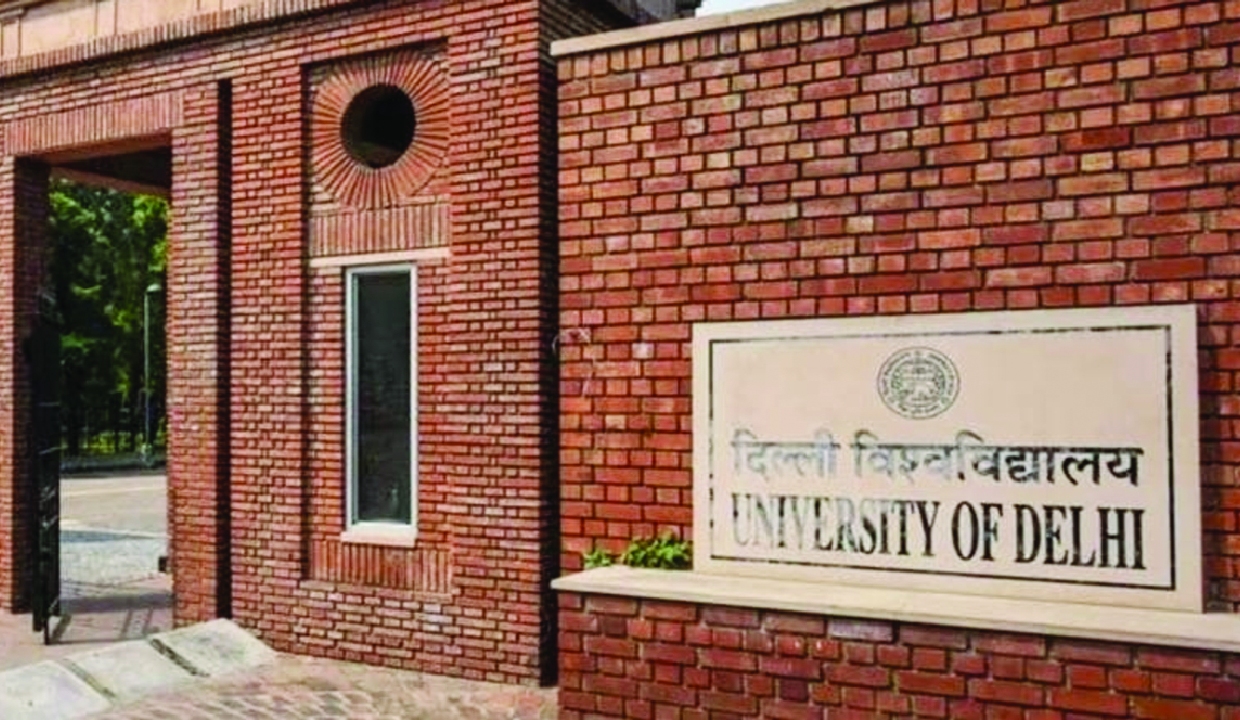
Delhi University has granted special permission to two of its colleges — Aditi Mahavidyalaya and Bhagini Nivedita College — to admit undergraduate students through merit-based admissions in physical mode to fill seats that have remained vacant despite multiple rounds of the CUET-based admission process.
The colleges had approached the university after repeated admission rounds under the Common Seat Allocation System (CSAS) failed to generate adequate enrolment. They had proposed considering a combination of CUET performance and Class 12 marks to fill the remaining seats. Authorities from the two colleges attributed the persistent vacancies to their location and the limited applicant pool for women-only institutions.
The move marks a departure from the university’s Common University Entrance Test (CUET)-based admission system, under which admissions to undergraduate programmes are conducted through the Common Seat Allocation System (CSAS).
DU Registrar Vikas Gupta confirmed that both colleges had been granted permission to admit students through CUET scores as well as merit-based selection. Bhagini Nivedita College, in a notice dated August 1, invited applications for merit-based admissions in physical mode for several undergraduate programmes, including BCom, BA, BSc and other courses.
The notice said admissions would be made strictly on the basis of Class 12 marks and availability of seats, with applications to be submitted by August 5. Document verification and fee payment are scheduled for August 6 and 7. Bhagini Nivedita College is located in Kair Village, on Najafgarh-Dhansa Road.
Aditi Mahavidyalaya, situated in Bawana, said around 40 per cent of its seats have remained vacant in recent years under the CUET admission process.
College authorities said many students from nearby rural areas, particularly girls, do not register for CUET because of concerns about studying far from home, resulting in several eligible candidates being left out despite strong Class 12 performance.
The college maintained that CUET would continue to remain the primary mode of admission and that the merit-based process was intended only to fill vacant seats after the regular admission rounds.
The development highlights the challenges faced by some DU colleges in attracting students through the university-wide CUET and CSAS admission framework.
While the system is designed to bring uniformity to undergraduate admissions, continued vacancies at colleges located away from the city’s main academic hubs have prompted institutions to seek greater flexibility in filling their sanctioned seats.
The decision has drawn criticism from the Indian National Teachers Congress (INTEC), which has urged the university to adopt a uniform policy for filling vacant undergraduate seats across all colleges instead of extending the facility to only two institutions. INTEC has written to the vice-chancellor seeking a common and transparent mechanism for such admissions.
DU has been admitting students to various undergraduate programmes offered across its 67 affiliated colleges through the CUET-based admission process conducted by the National Testing Agency since the 2022-23 academic session. So far, two rounds of admissions for the 2026-27 session have already concluded.
