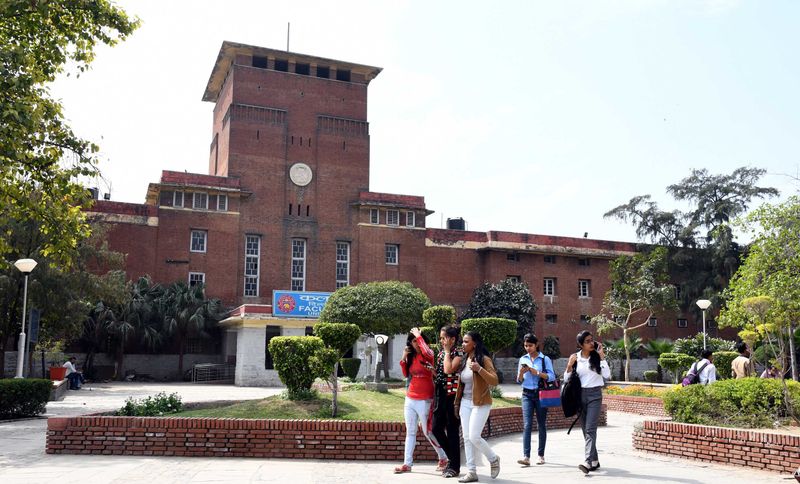
Delhi University (DU) has made a special exception to its Common University Entrance Test (CUET)-based admission system, allowing Aditi Mahavidyalaya and Bhagini Nivedita College to conduct merit-based admissions in person for the 2026-27 academic session.
The move is aimed at filling seats that have remained vacant despite multiple rounds of admissions through the university’s regular counselling process.
The decision allows the two women’s colleges to consider students for undergraduate admissions through merit-based selection, alongside CUET scores, subject to the availability of seats and the university’s approval.
DU Registrar Vikas Gupta confirmed that both colleges had been granted permission to admit students through CUET scores as well as merit-based selection.
The colleges had approached the university after repeated admission rounds under the Common Seat Allocation System (CSAS) failed to generate adequate enrolments. They had proposed considering a combination of CUET performance and Class 12 marks to fill the remaining seats.
In a notice, Aditi Mahavidyalaya invited applications for undergraduate programmes for the 2026-27 academic session, stating: “This is to inform all concerned that applications are invited for merit-based admission in the undergraduate programmes for the academic session 2026-27, subject to the availability of seats and approval of the University of Delhi.”
The college principal said the institution also faces a shortage of recreational spaces. With vacancies continuing year after year, Aditi Mahavidyalaya sought permission from DU to strengthen enrolment through direct, in-person admissions.
Bhagini Nivedita College has also been allowed to adopt a similar process. In a notice, Principal Ruby Mishra invited applications for admission through the physical mode, stating: “Applications are invited for merit-based admission in the physical mode…”
The development highlights the challenges faced by some DU colleges in attracting students through the university-wide CUET and CSAS admission framework.
While the system is designed to bring uniformity to undergraduate admissions, continued vacancies at colleges located away from the city’s main academic hubs have prompted institutions to seek greater flexibility in filling their sanctioned seats.
