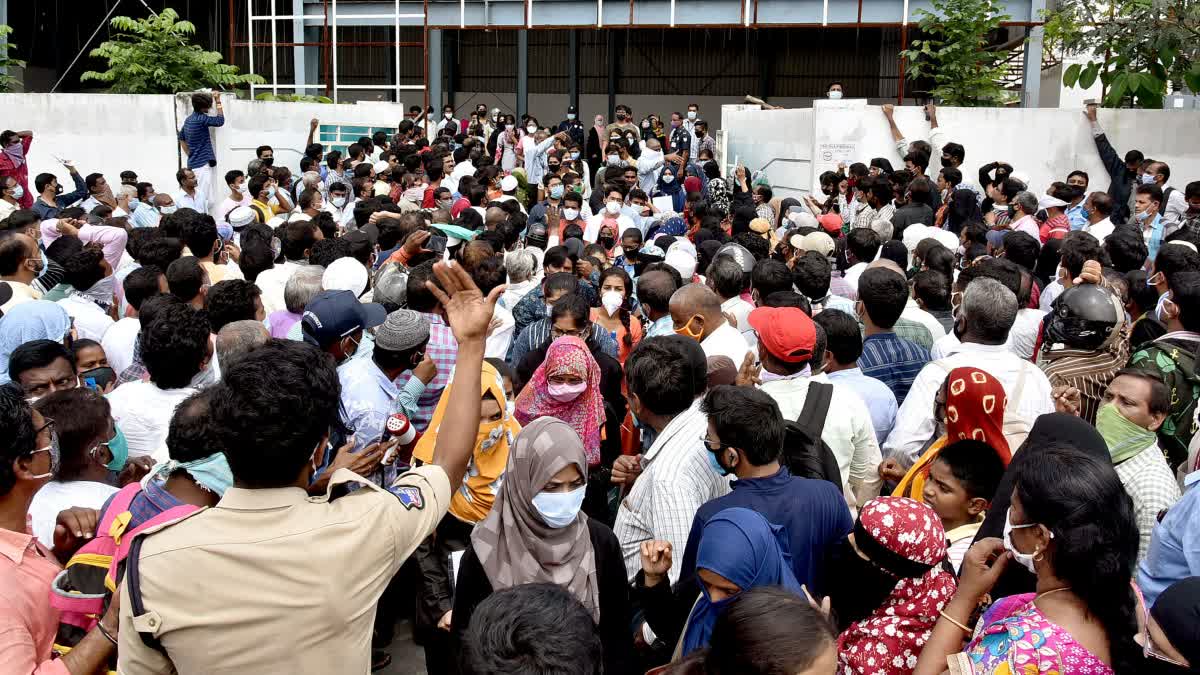
Students and their parents outside an examination centre for a medical stream exams from in Hyderabad on Sep 28, 2020 (File/ANI)
New Delhi: Over 20 lakh students sit for the National Eligibility-cum-Entrance Test (NEET) every year but, few remember that India’s medical admission process once involved dozens of entrance examinations conducted by states, private colleges and central authorities.
The recent controversies surrounding NEET have once again brought attention to the exam’s origins, its predecessor, the All India Pre-Medical Test (AIPMT), and the recurring challenge of maintaining the integrity of high-stakes examinations.
Prior to NEET, the Indian medical admission system consisted of a maze of entrance exams. First, the Central Board of Secondary Examination (CBSE) introduced the AIPMT in 1988 for 15 per cent of the medical seats to be filled through the All India quota.
States would also conduct its own medical entrance exam in addition to the AIPMT. A number of private medical colleges and associations had separate entrance exams as well. As a result of this fragmented system, the average applicant would travel to different cities and states for months at a time to take numerous entrance exams.
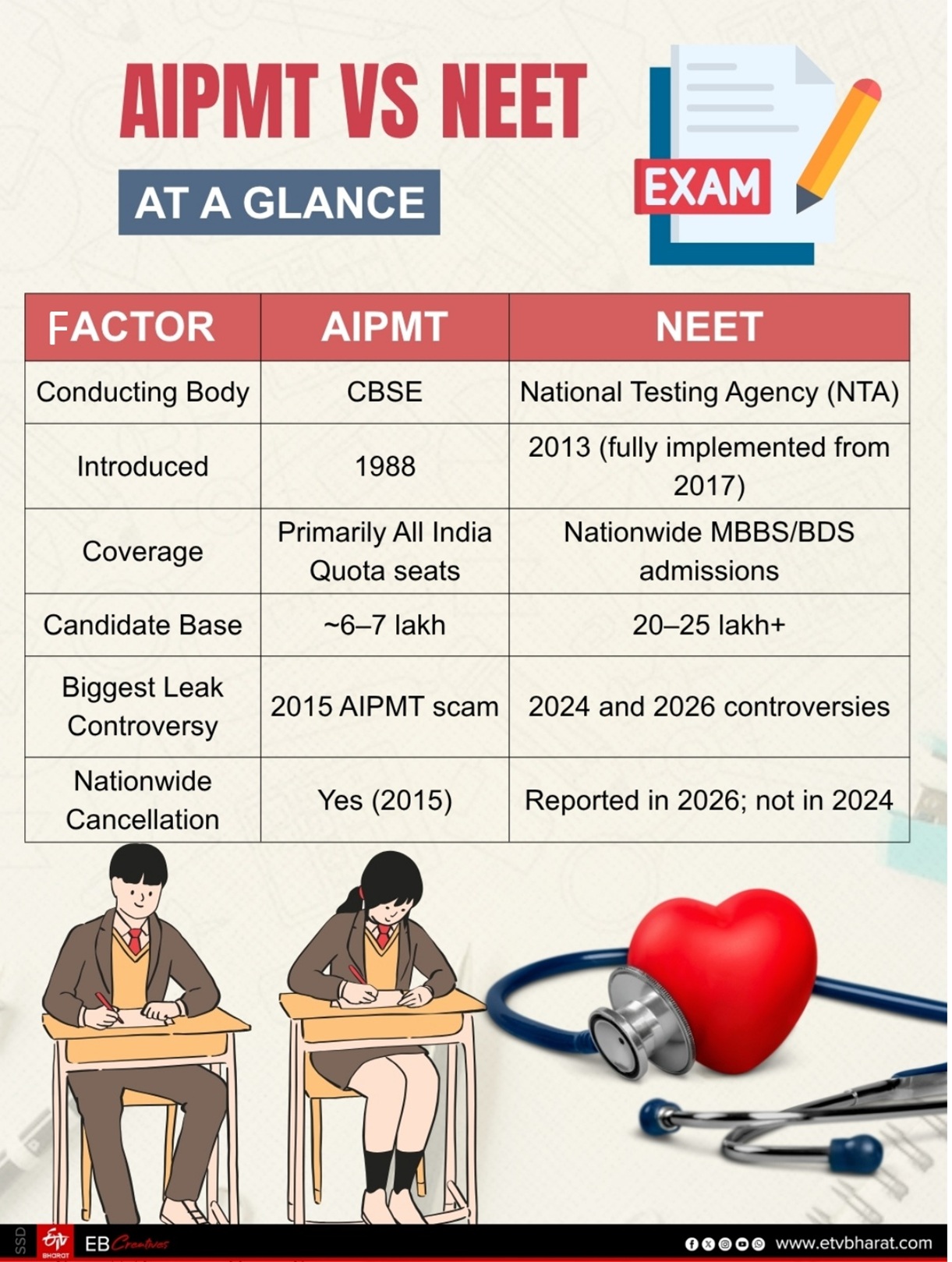
AIPMT vs NEET at a glance (ETV Bharat Graphics)
Dr Rohan Krishnan, Chairman of the Delhi Medical Association (DMA) and Chief Patron of the Federation of All India Medical Associations (FAIMA), recalls that the process was far more complicated than what students experience today.
According to him, AIPMT itself followed a two-stage format in its earlier years. Candidates first cleared an objective preliminary examination and then appeared for a subjective mains examination conducted through traditional pen-and-paper methods.
“The challenge extended far beyond AIPMT,” he said, noting that students had to simultaneously prepare for different examination patterns and travel extensively during the admission season.
Birth of NEET and a Supreme Court twist
The concept of a single national medical entrance examination was proposed by the Medical Council of India (MCI) to create a uniform admission system across the country. The first NEET-UG examination was conducted in 2013. However, the experiment was short-lived.
In July 2013, the Supreme Court struck down NEET after challenges from several states and private institutions, restoring the earlier system of AIPMT and state-level examinations.
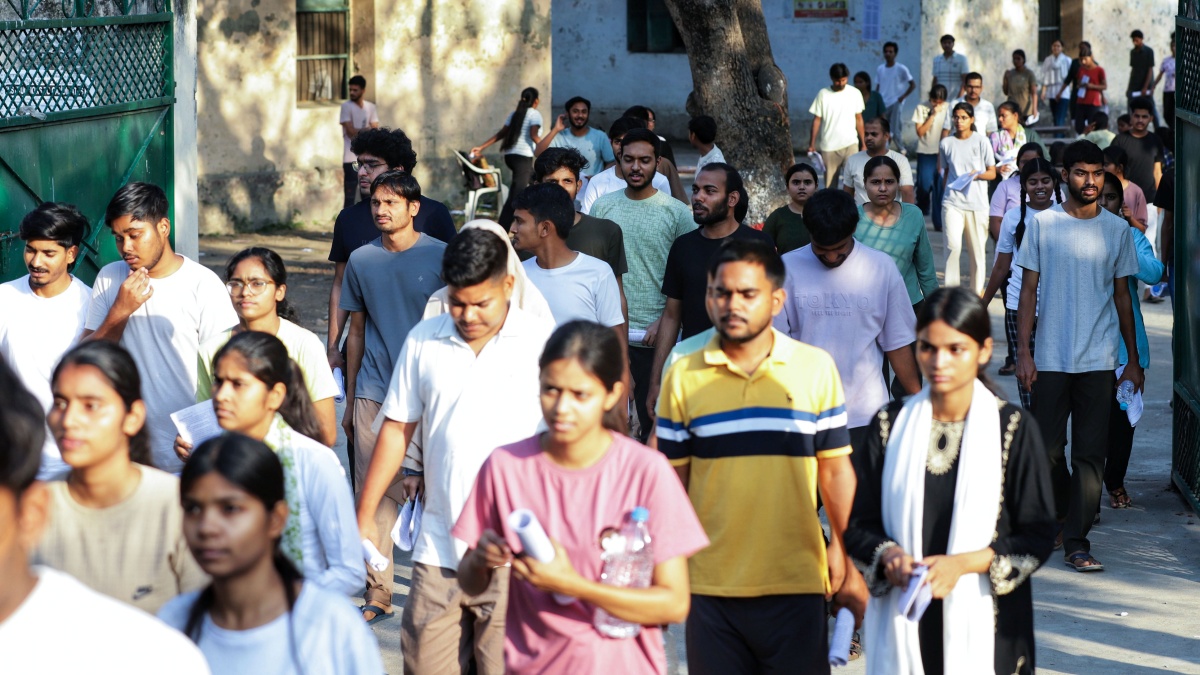
Aspirants leave the examination centre after appearing for the NEET 2026 exam at Lucknow Montessori School, in Lucknow on May 03, 2026. (File/ANI)
A pivotal moment occurred in April 2016 when the Supreme Court reinstated NEET. The shift from AIPMT to NEET was completed in two steps. The AIPMT that had been held on May 1, 2016, became NEET phase 1, while NEET phase 2 occurred on July 24, 2016.
From 2017 onwards, NEET became the sole entrance examination for admissions to MBBS and BDS courses across most of the country.
2015 AIPMT leak that shook the system
The biggest examination scandal before the NEET era occurred in 2015. Prior to the implementation of NEET, a sophisticated cheating operation had been revealed by the Haryana Police during AIPMT 2015. A set of vests fitted with SIM and Bluetooth devices was seized and used to transmit answers electronically during that exam.
Numerous arrests took place in Rohtak following the discovery, uncovering the vulnerability of the national examination process. The Supreme Court subsequently ruled that the examination process had been compromised and cancelled the entire AIPMT 2015 examination, despite around 6.3 lakh candidates having appeared for it. A fresh examination was ordered.
The incident remains one of the most significant medical entrance exam scandals in India and the only nationwide medical entrance test before NEET that was fully cancelled due to a leak and cheating controversy.
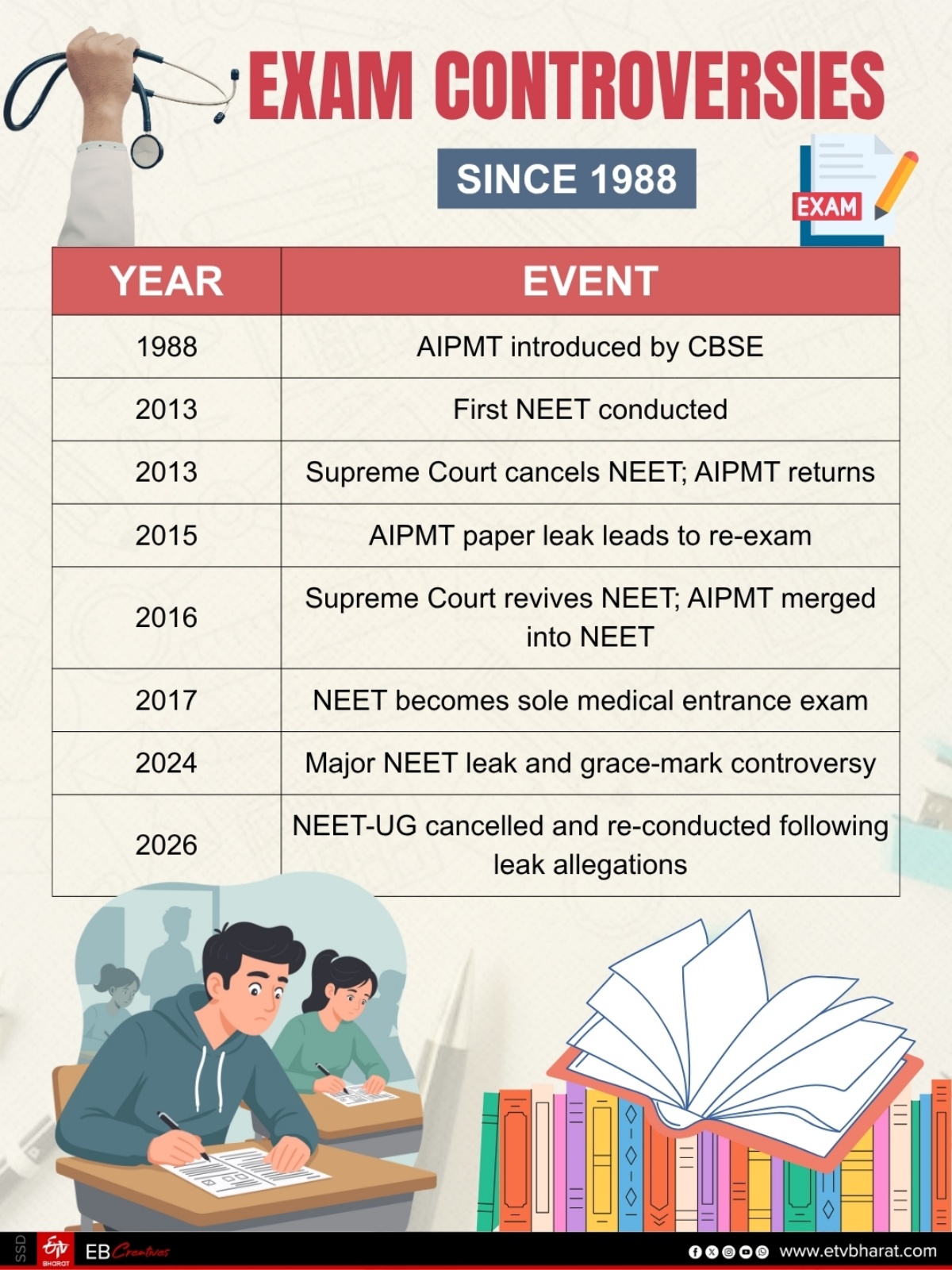
Exam controversies since 1988 (ETV Bharat Graphics)
Why NEET was introduced
The move towards NEET was driven not only by the desire for administrative convenience but also by concerns about transparency.
According to Dr Krishnan, allegations of paper leaks, admission irregularities and lack of uniformity had surfaced periodically across various entrance examinations under the earlier system. “The idea of ‘One Nation, One Medical Entrance Examination’ eventually led to the introduction of NEET,” he said.
He argues that a single examination reduced logistical burdens on students and created a common merit list where all candidates compete under the same conditions.
“Today’s students face intense competition, but they are spared the uncertainty and complexity of navigating dozens of different entrance examinations spread across the country,” he added.
Was AIPMT more difficult than NEET?
The debate over whether AIPMT was tougher than NEET continues among students and coaching institutes. There is no official comparison because the examinations were conducted in different eras and under different structures.
However, education experts generally suggest that AIPMT was heavily dependent on biology and direct NCERT-based recall. In some years, the physics portion of the exam was considered to be especially difficult to complete. NEET drastically differs, as it has a more application-focused approach to the different subjects, requiring greater understanding and connection between subjects.

Union Education Minister Dharmendra Pradhan visits the headquarter of the National Testing Agency (NTA) to assess the on-ground conduct of the NEET UG 2026 examination, in New Delhi on March 3, 2026 (Office of Dharmendra Pradhan/ANI Photo)
Lastly, the main difference between AIPMT and NEET is that the competition level has increased substantially. AIPMT generally had 600-700k applicants, whereas NEET has approximately 200k each year, creating an extremely competitive race for entrance into medical programmes.
Many educators therefore argue that while individual AIPMT papers may have been tougher in certain years, NEET is considerably more competitive because of the sheer number of candidates.
NEET’s own leak controversies
NEET has also faced repeated allegations regarding examination security. In 2016, reports of question paper leaks surfaced in some centres during the first year of implementation, although no nationwide cancellation followed.
Over the course of 2017 through 2023, experts and certified monitoring agencies looked into many different functions of solver gangs, impersonation networks and cheating at the regional level.
The biggest controversy to erupt was that of the paper leak from Bihar in 2024, which resulted in national protests. In addition, questions were raised about the awarding of grace marks to certain candidates.
This entire situation was brought to the Supreme Court for the purpose of determining whether or not the whole examination had been compromised.
In the end, the court did not cancel the exam answered by every candidate in the country, but it did order a re-test for the 1,563 students who received disputed grace marks.
From fragmented to a national exam
In the last 40 years, India’s medical entrance examination process has transformed significantly from being an amalgamation of state, private and national exams to a single national exam resulting from the NTSE reforms that occurred prior to the introduction of NEET.
Although there are still arguments about fairness, access and the security of the examination process, NEET represents one of the most substantial changes in the higher educational system in India.
Also Read
- Nationwide Mock Drill Underway Ahead Of NEET-UG Re-Test; Security Tightened
- ‘Stop Gambling With Children’s Future’: Rahul Gandhi Slams Govt After Nagpur NEET Aspirant Gets Exam Centre In Abu Dhabi
