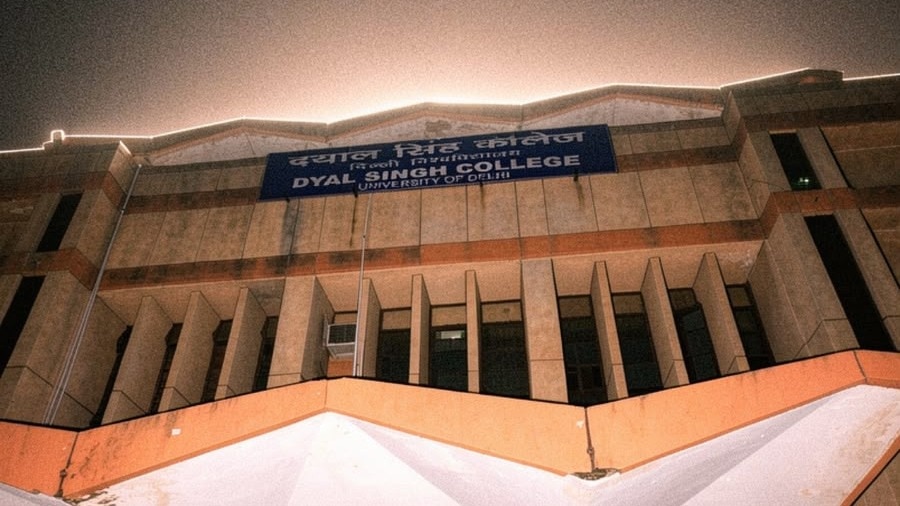
It was a bright, sunny day with a little dust in the air when we decided to visit Dyal Singh College on Lodhi Road. The reason behind this visit was simple. Recently, the college has emerged as one of the top preferences for DU aspirants, with more and more students choosing it over several other Delhi University colleges. We were genuinely curious to find out what had changed.
We last visited Dyal Singh College four to five years ago. Back then, the campus looked completely different. Many of the buildings were in poor condition, the infrastructure needed major improvements, and the college had a reputation for being a ‘rowdy college. ‘Honestly, we didn’t expect much when we entered the campus this time.
But the moment we stepped inside, we were genuinely surprised.
New construction work was underway, the buildings looked much better maintained, the campus felt cleaner, and the overall atmosphere was more positive and welcoming. It didn’t feel like the same college we had visited years ago.
To understand what had truly changed, we didn’t just rely on what we saw. We spoke to the people who attend college every day. We interacted with students and faculty members and eventually sat down with the principal for an in-depth conversation.
Almost everyone pointed towards the same reason behind the transformation.
Students described the principal as approachable, understanding, and genuinely supportive. Faculty members spoke about a healthier work environment and how the administration encourages continuous improvement.
Students also shared that the college gives them opportunities beyond academics, whether it is participating in cultural societies, sports, research, internships, or leadership roles or developing practical skills that prepare them for life outside the classroom. They said they feel heard, supported, and motivated to make the most of their college experience.
What we expected to be a formal interview with the principal turned into an inspiring conversation about education, opportunities, and the vision for the college’s future. Listening to his perspective and then hearing similar experiences from students and faculty made the transformation feel real rather than just visible.
‘THE PERCEPTION HAS CHANGED’
Speaking about the college’s journey, Principal Professor VK Paliwal said Dyal Singh College has been serving students on its present campus since 1959.
He pointed out that the institution traces its roots to the original Dyal Singh College in Lahore, now in Pakistan, while another branch is managed by the Dyal Singh Trust in Karnal. As a constituent college of the University of Delhi, he said, the institution has consistently performed well in academics as well as extracurricular activities for decades.
Asked why Dyal Singh College has become one of the most preferred colleges among CUET aspirants, Prof. Paliwal said the quality of work has remained consistent; the biggest change has been public perception.
“We have been doing good work for a very long time. What has changed is the perception among students, parents, and the general public. Our faculty, infrastructure, and the opportunities available for students’ overall development have helped build that trust,” he said.
According to him, the college believes in creating an environment where students grow not only academically but personally as well.
“We encourage students to participate in academics, sports, cultural societies, research, and leadership activities. Our aim is to develop confident, responsible, and happy individuals, not just graduates,” he added.
FACULTY AS MENTORS, NOT JUST TEACHERS
Prof. Paliwal believes one of the institution’s biggest strengths is its faculty.
“Our teachers are highly qualified and remain updated with the latest knowledge and technology. More importantly, they mentor students and provide them with the right platform to explore their potential,” he said.
He added that the positive experiences of students have become the college’s biggest strength.
“Students from across the country study here. When they go back home or speak to their friends, they share their experiences. That word of mouth has played a major role in changing the image of Dyal Singh College,” he said.
‘THE COLLEGE HAS TRANSFORMED SIGNIFICANTLY’
The visible changes on campus were echoed by Komal Rani, Senior Personal Assistant to the Principal.
“Compared to earlier, the college has transformed significantly. We now have better classrooms, a modern library, and improved parking facilities. These developments have created a better learning environment and increased students’ interest in the college,” she said.
She added that the institution has steadily improved its standing over the years.
“Our ranking has improved, and we are committed to continuing this progress with the aim of becoming one of the top-ranked institutions,” Rani said.
WHAT STUDENTS SAY
For students, the college’s appeal goes beyond its infrastructure.
Khushpreet Kaur, a third-year BA (Hons.) English student, said the location played a major role in her decision to choose Dyal Singh College.
“The college is very well-connected by the Metro, which makes travelling convenient and safe every day. That is definitely one of its biggest advantages,” she said.
She also praised the academic environment.
“Our teachers are experienced and supportive. The library is well-stocked, there are plenty of opportunities to participate in societies and extracurricular activities, and students receive encouragement to grow beyond academics,” Khushpreet said.
According to her, today’s students evaluate colleges on multiple factors before making a decision.
“Placements, faculty, and location are the three biggest factors. Everyone wants good career opportunities after graduation, but students also want a college that is safe, easily accessible, and offers a positive learning environment,” she added.
By the end of our visit, we found ourselves thinking about something we never imagined four years ago. Watching Dyal Singh College evolve from being labelled a ‘rowdy college’ to becoming one of Delhi University’s most preferred colleges in South Campus has been inspiring. The transformation is not just visible in its buildings but also in its culture, leadership, and the confidence of its students.
– Ends
