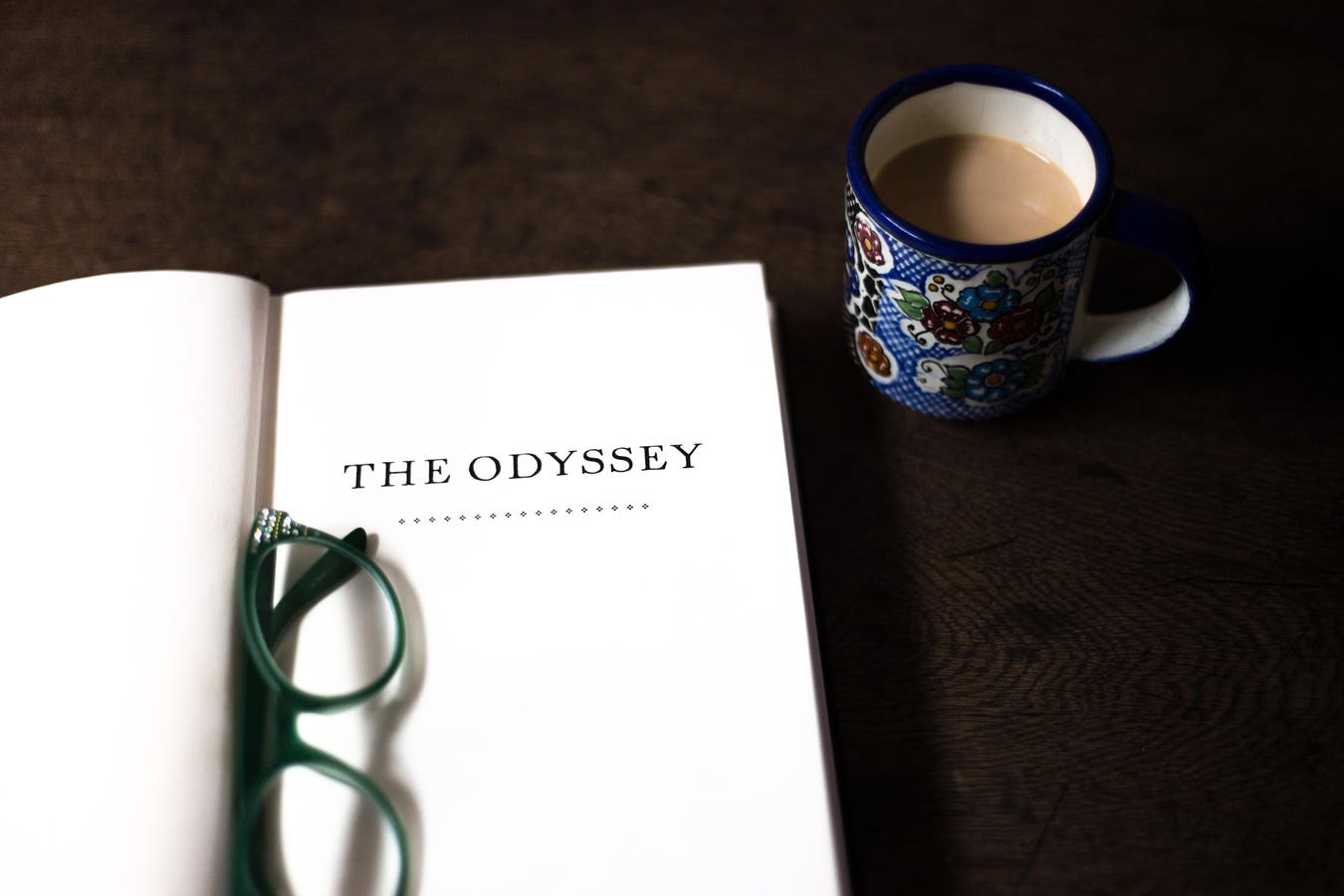

The extraordinary success of The Odyssey reflects a broader cultural resurgence of the humanities.
getty
The Odyssey was always destined to be one of the year’s biggest films. An epic directed by Christopher Nolan and starring Matt Damon as Odysseus was never going to struggle at the box office.
What few anticipated was that a nearly three-hour, R-rated adaptation of a 2700-year-old poem would become something more than a blockbuster. Just ten days after its release, The Odyssey generated more than $650 million worldwide, including nearly $290 million domestically, making it the sixth-highest-grossing Hollywood film of the year. More surprising than its commercial success, however, is what it has revealed: audiences remain deeply captivated by one of Western civilization’s oldest stories.
The film has also reignited an intellectual debate. Emily Wilson, whose celebrated 2017 translation introduced countless new readers to Homer, recently challenged aspects of Nolan’s interpretation in the London Review of Books. While praising the renewed public interest in The Odyssey, she argued that the film sacrificed much of what makes Homer’s epic endure, its psychological, political, and ethical complexity, in favor of spectacle. She questioned whether Nolan’s Odysseus captured the moral ambiguity and emotional depth at the heart of the poem, arguing that the adaptation had “nothing convincing to say” about memory, war, family, or history. Yet even Wilson appreciated the film’s cultural impact, expressing hope that its popularity would inspire more people to read Greek literature and strengthen support for the humanities.
That’s the more interesting story. For years, we’ve been told that the humanities are in decline, and that today’s students would be better served studying coding than classics. Yet the evidence increasingly points in another direction, especially as the rise of AI has shifted career landscapes. From bestselling novels inspired by Greek mythology to the explosive success of The Odyssey, from the growth of classical education to renewed interest in ancient languages, the classics are enjoying an unlikely renaissance.
And it’s showing up in higher education. At one end of the spectrum, humanities departments and Ph.D. programs continue to face significant financial pressures, with some universities reducing graduate admissions, consolidating departments, or eliminating programs altogether. Yet at the undergraduate level, many elite institutions are signaling renewed interest in the liberal arts. This summer, Duke University highlighted targeted outreach to prospective humanities students as part of a record transfer class. Faculty personally contacted admitted students interested in the humanities, while admissions staff expanded recruitment efforts designed to reinforce the university’s liberal arts mission.
A Renaissance Across the Political Spectrum
One of the most fascinating aspects of the classics’ resurgence is that it is coming from both ends of the ideological spectrum.
On the conservative side, classical education has experienced remarkable growth over the past decade. Classical charter schools have expanded nationwide, homeschool families increasingly embrace Great Books curricula, and the Classic Learning Test (CLT), now accepted by hundreds of colleges and universities, has built its identity around literature, philosophy, and the foundational texts of Western civilization.
For many of these families, the appeal lies in an educational philosophy that emphasizes close reading, primary sources, moral reasoning, and sustained engagement with enduring texts. Rather than treating Homer or Plato as relics of the past, they view them as essential starting points for understanding history, citizenship, leadership, and the human condition.
At the same time, contemporary classicists have revisited ancient texts through feminist, queer, and postcolonial lenses, asking fresh questions about gender, sexuality, empire, translation, and the assumptions that have shaped how these works have been read for centuries. Emily Wilson’s translation of The Odyssey exemplifies this movement, and demonstrates that even the oldest texts remain open to reinterpretation. That same impulse has resonated far beyond academia. Madeline Miller’s bestselling novels Circe and The Song of Achilles, alongside Natalie Haynes’s acclaimed retellings including A Thousand Ships and Stone Blind, have reimagined familiar myths by centering voices and perspectives that long remained at the margins. Art historians have done something similar, mounting exhibitions that challenge longstanding assumptions about the ancient world: from reconstructing the vivid colors of Greek sculpture to exploring how classical ideals continue to shape modern conversations about race, identity, and power.
In other words, these movements begin from different assumptions but arrive at the same conclusion: the classics still matter. Whether students encounter the classics through a Great Books seminar, a feminist translation, or Christopher Nolan’s latest blockbuster, they’re engaging with ancient texts that continue to provoke debate rather than settle it.
Why It Matters in College Admissions
As someone who has spent my career helping students navigate highly selective college admissions, I don’t think students should study the classics because they believe it will help them get into college.
In fact, that’s exactly the wrong reason. Admissions officers aren’t looking for more Latin students or more philosophy majors. They’re trying to build intellectually vibrant classes. A campus composed entirely of future software engineers isn’t much of a university. Colleges need philosophers alongside physicists, historians alongside computer scientists, and students who approach complex questions from very different intellectual traditions.
That diversity isn’t simply about academic interests, it’s about ways of thinking. As my colleague Dr. Tina Brooks, Senior Private Counselor at Top Tier Admissions and former Associate Dean of Admissions at Pomona College, has written, “The humanities help us understand and interpret the human experience, as individuals and societies.” She argues that disciplines like history, philosophy, literature, and art history cultivate precisely the qualities that universities, and increasingly employers, value: critical thinking, creative problem-solving, clear communication, ethical reasoning, and the ability to engage thoughtfully with competing ideas.
That’s why authentic intellectual curiosity is so compelling in an admissions process where thousands of applicants present exceptional grades, advanced coursework, polished extracurriculars, and impressive research. A teenager who falls down a rabbit hole of Greek tragedy after seeing The Odyssey, then spends the summer reading Sophocles and Euripides. Another who becomes captivated by Marcus Aurelius and the Stoics while thinking about resilience and purpose.
These students aren’t following a checklist, they’re following their curiosity. And admissions officers notice.
The Liberal Arts in an Age of AI
Ironically, artificial intelligence may be strengthening, not weakening, the case for the humanities.
For years, students heard the same advice: learn to code. As I argued earlier this year in my Forbes article, “What Princeton Is Really Looking For: Students Who Still Love to Read,” selective universities are increasingly signaling that deep reading cultivates the very qualities AI cannot replicate: sustained attention, empathy, nuanced analysis, and original thought. As generative AI rapidly automates many technical tasks, employers are placing a premium on skills that remain stubbornly human. A recent Forbes analysis by Sho Dewan highlighted LinkedIn workforce data suggesting English and social science graduates are finding clearer pathways into technology than many entry-level software engineers, arguing that we’re entering what it calls a “narrative edge era” in which context, persuasion, judgment, and storytelling have become competitive advantages.
The Financial Times has observed a similar shift. One investment firm executive described scaling back return offers for technically gifted AI-native interns after discovering their thinking lacked depth, leading the firm to recruit more humanities graduates.
Why This Moment Matters
For years, applicants assumed the safest path to selective college admissions, and career success, was to accumulate more technical credentials. The pendulum may finally be swinging back toward something universities have long claimed to value: thoughtful engagement with big ideas.
Christopher Nolan didn’t set out to reshape college admissions. But the extraordinary success of The Odyssey may be reminding us of something admissions officers have known all along. The students who stand out aren’t simply the ones who master the latest technology. They’re the ones who demonstrate that they know how to think about what it means to be human.
