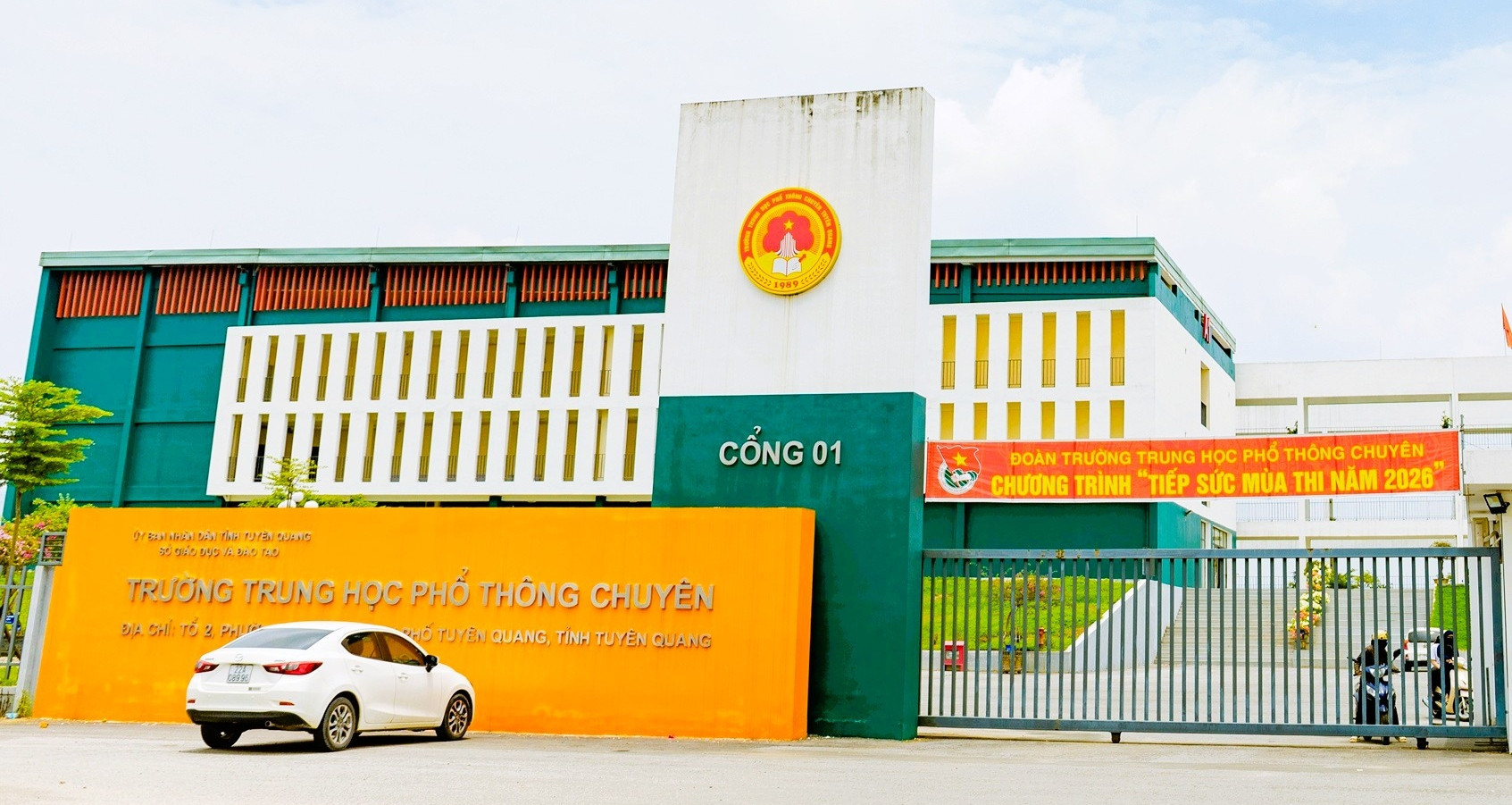
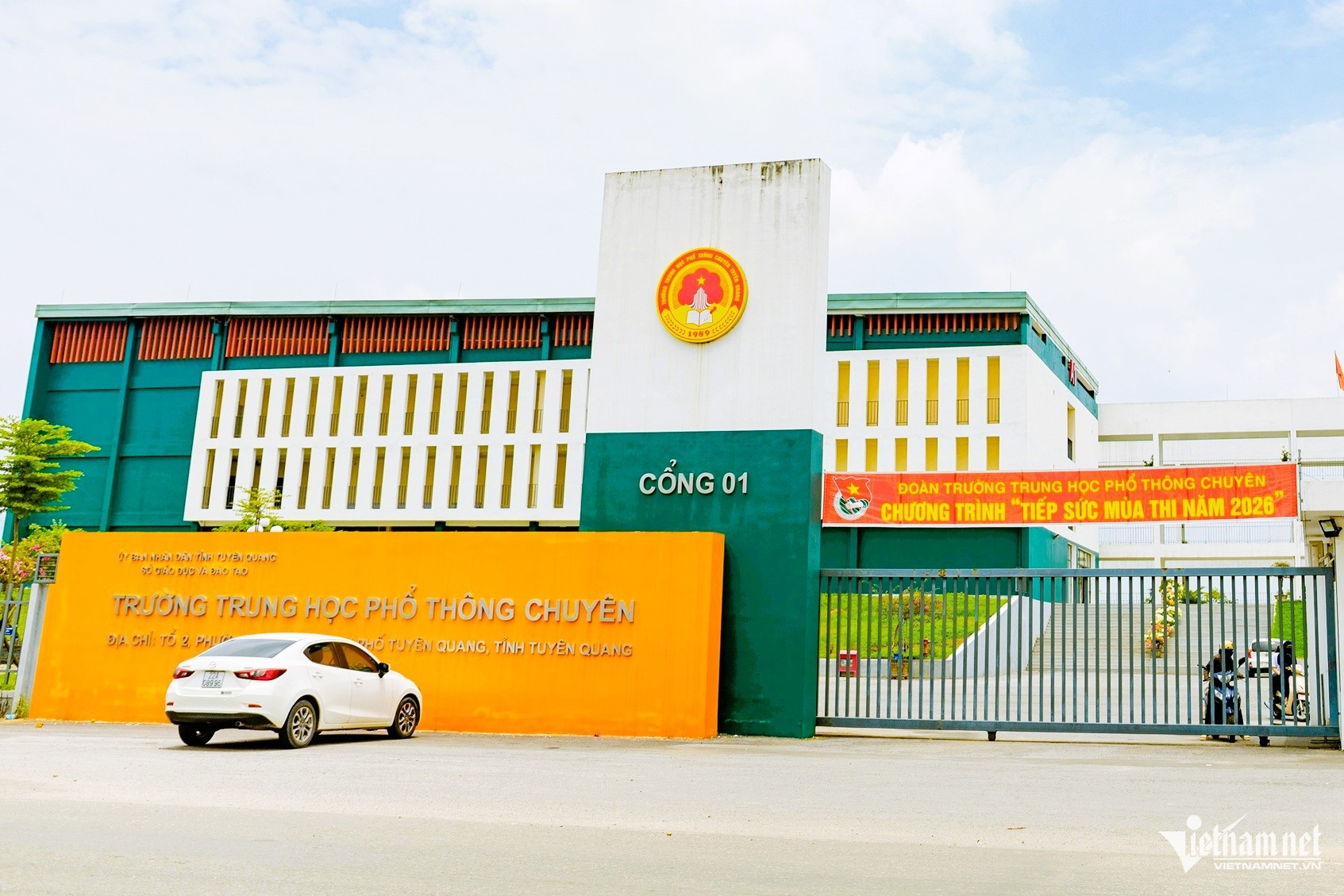
Speaking at a meeting of the National Assembly Standing Committee on July 14, Nguyen Dac Vinh, chairman of the National Assembly’s Committee for Culture and Social Affairs, described the irregularities uncovered in the 2026 national high school graduation mathematics examination in Tuyen Quang Province as “extremely serious.”
According to Vinh, the national high school graduation examination is one of Vietnam’s most important public examinations, carrying significant social impact.
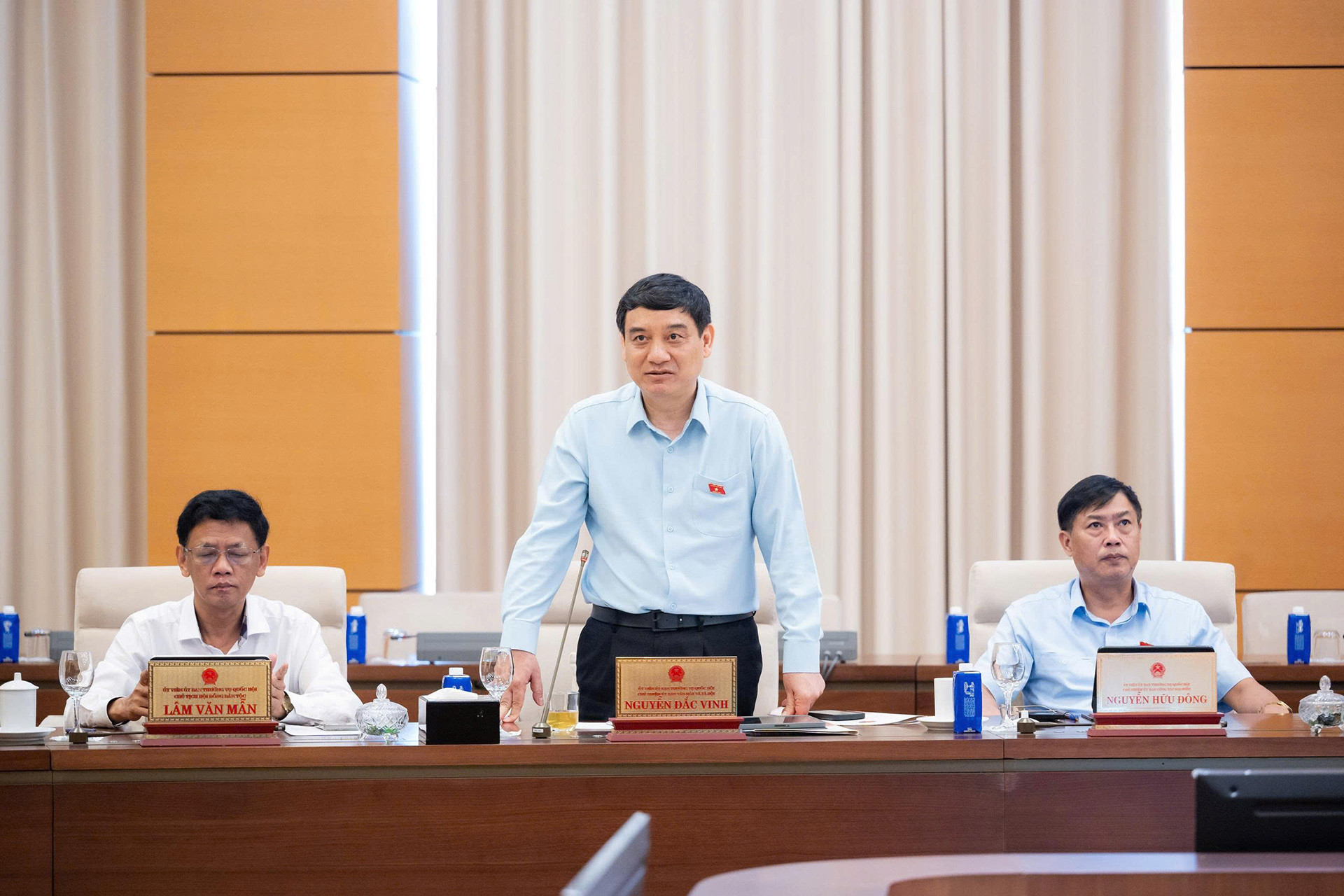
While stressing the need to deal firmly with any violations and strengthen education governance and examination management, he also argued that broader policy solutions should be carefully studied.
“In the high school graduation examination, students are strongly motivated to achieve high scores because the results are also used for university admission. That is one factor that can contribute to misconduct. We believe it is worth studying whether the two examinations should be separated,” he said.
Under his proposal, the high school graduation examination would assess students’ learning outcomes and determine whether they have met graduation standards, while universities would be responsible for their own admissions.
One exam struggles to serve two objectives
Le Dong Phuong, former director of the Center for Higher Education Research under the Vietnam National Institute of Educational Sciences, supports the idea of holding two separate examinations.
“The purpose of high school graduation is simply to determine whether students have achieved the minimum standards needed to complete secondary education. University admissions, however, are designed to identify the strongest candidates. One measures the minimum threshold, the other measures the highest level of achievement. They require different assessment scales, so combining them inevitably creates tensions,” Phuong said.
He suggested that high school graduation could become a simpler assessment, with Grade 12 students taking an examination or completing a standardized assessment administered by local authorities.
According to Phuong, using graduation examination results for university admissions has become one of the factors contributing to misconduct and recurring problems.
Those weaknesses have been reflected in years of public debate over examination difficulty, unexpectedly large numbers of perfect scores, and situations where applicants achieving maximum marks still failed to secure university admission.
“Even in the 2026 examination, which served both graduation and university admissions, very few people discussed the graduation pass rate. Society’s attention was almost entirely focused on whether students would be admitted to university,” he said.
Phuong supports separating the system into two distinct examinations. Under his proposal, provincial authorities would organize the high school graduation examination, while the Ministry of Education and Training would administer a nationwide university entrance examination. Universities that already meet the necessary requirements would continue to be allowed to organize independent admissions examinations under institutional autonomy.
Although several universities already operate their own entrance examinations, Phuong believes admissions cannot yet rely entirely on those assessments because access remains uneven across different regions.
Most independent examinations are computer-based or held mainly in urban and economically developed areas, making participation more difficult for students living in remote, mountainous and rural communities.
For that reason, he argues that even if the two examinations are separated, the government should continue organizing a nationwide university entrance examination during a transition period until universities can develop admission systems that provide equal opportunities for all candidates.
Reforming exam administration, not simply creating another exam
Hoang Ngoc Vinh, former director-general of the Department of Vocational Education under the Ministry of Education and Training, takes a different view.
He argues that the irregularities reported during the 2026 examination were not caused directly by the combined graduation and university admissions model.
“The root of the problem lies in examination and admissions policies that still contain significant weaknesses. At the same time, the examination system continues to rely largely on temporary and part-time personnel without professional assessment standards, advanced technology or sufficiently independent oversight,” Vinh said.
He warned against treating every serious incident as evidence that Vietnam should immediately split the examination system.
“Separating the examination into two would represent a major policy change. Its impact on social costs, pressure on students, regional equality and the possible return of widespread university entrance exam preparation would all need to be carefully assessed,” he said.
Instead of replacing one examination with two, Vinh argued that Vietnam should pursue more fundamental reforms, including modernizing examination technology, building standardized question banks, strengthening data management before results are released, introducing stronger independent oversight and developing a professional assessment workforce.
“Vietnam needs a comprehensive transformation of its examination system. We cannot continue addressing problems that have existed for more than two decades with temporary fixes—mobilizing additional staff every exam season and adding new procedures after each incident. The underlying causes must be addressed rather than repeatedly treating only the symptoms,” he said.
Lawmaker also questions multiple-choice testing
Beyond proposing separate examinations, Nguyen Dac Vinh also questioned whether multiple-choice testing should remain the dominant assessment format, particularly for mathematics.
He argued that education should evaluate not only knowledge but also students’ ability to present logical reasoning and structured thinking. Purely multiple-choice examinations, he said, reduce assessment to selecting the correct answer.
He also noted that, despite randomized question sets, multiple-choice examinations may be more vulnerable to certain forms of interference than traditional written examinations.
Drawing on international experience, Vinh said many education systems combine approximately 70% multiple-choice questions with 30% written responses to better evaluate students’ analytical abilities and broader competencies.
Despite recent controversies, he emphasized that Vietnam’s leadership remains committed to dealing firmly with any examination violations.
Government promises thorough investigation
Deputy Prime Minister Nguyen Van Thang told the National Assembly Standing Committee that the government fully recognizes public concerns surrounding the examination controversy.
He said the Ministry of Education and Training and relevant authorities had been instructed to conduct a prompt, objective and comprehensive investigation into the reported irregularities involving the mathematics examination in Tuyen Quang.
If violations are confirmed, they will be handled strictly in accordance with the law to ensure fairness for candidates and preserve public confidence in Vietnam’s education system, he said.
Thang added that Prime Minister Le Minh Hung has closely followed the case, chaired government discussions on the matter, and will meet with leaders of Tuyen Quang Province to oversee further actions that both uphold the law and ensure appropriate handling of the case.
Thanh Hung – Tran Thuong
